
New Scientific Publication: Tuning Photoluminescence via Entropy Engineering in High-Entropy Re₂Zr₂O₇ Ceramics
Researchers from FunGlass, CEITEC, and the Joint Glass Centre of the Institute of Inorganic Chemistry of the Slovak Academy of Sciences, Alexander Dubček University of Trenčín, and the Faculty of Chemical and Food Technology of the Slovak University of Technology (widely known as Vitrum Laugaricio (VILA)) have published a new scientific paper entitled “Tuning photoluminescence via entropy engineering in high entropy Re₂Zr₂O₇ ceramics” in the Journal of the European Ceramic Society. The article appears in the special issue dedicated to the 8th International Conference on Fracture Mechanics and Fractography of Advanced Ceramics.
The research was carried out by Marek Rotter, Róbert Klement, Monika Michálková, Erik Ščasnovič, Tereza Havlíková, Karel Maca, Dušan Galusek, and Katarína Drdlíková, bringing together expertise from leading research institutions in Slovakia and the Czech Republic.
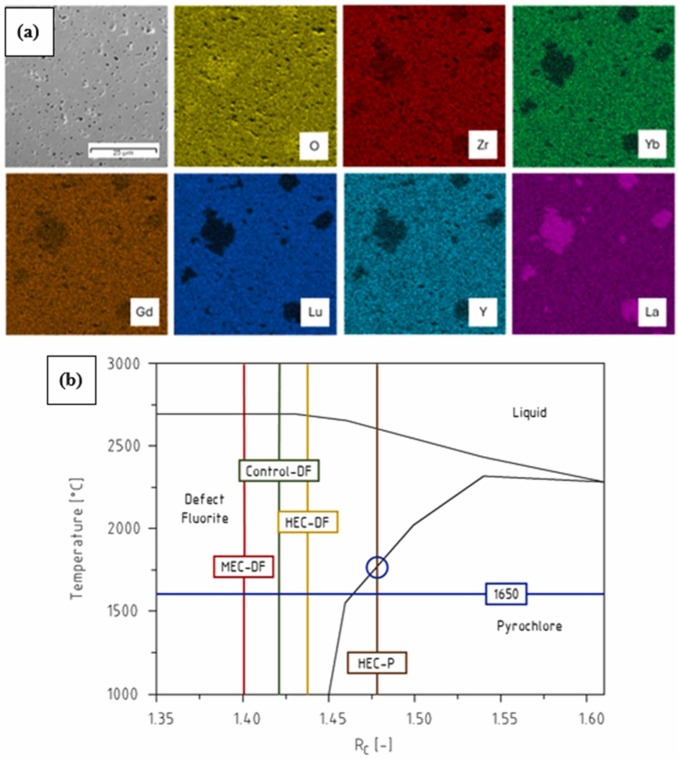
The study investigates a novel approach to tailoring the luminescent properties of advanced ceramic materials through entropy engineering. The team prepared Er³⁺-doped multicomponent RE₂Zr₂O₇ ceramics (RE = Y, Lu, Gd, La, and Yb) with carefully designed compositions and varying levels of configurational entropy. Using combustion synthesis followed by high-temperature sintering, the researchers explored how chemical complexity influences crystal structure and photoluminescent behaviour.
Their findings reveal that compositions with higher configurational entropy exhibit significantly enhanced luminescent performance, including both down-shifting and up-conversion emission, compared with low-entropy counterparts. The work demonstrates that entropy-guided compositional design not only enables reliable stabilization of the defect fluorite structure but also provides an effective strategy for improving the optical properties of rare-earth-doped ceramics.
These results contribute to the growing field of high-entropy materials and highlight new opportunities for developing advanced luminescent ceramics for photonic and optical applications.
The full article is available through the Journal of the European Ceramic Society:
https://doi.org/10.1016/j.jeurceramsoc.2026.118516
Acknowledgement
This work has received funding from the Horizon Europe research and innovation programme GlaCerHub under grant agreement No. 101087154. Additionally, this publication was supported by the project “Mechanical Engineering of Biological and Bio-inspired Systems”, funded as project No. CZ.02.01.01/00/22_008/0004634 by Programme Johannes Amos Commenius, call Excellent Research and by the CEITEC VUT-J-24-8621. CzechNanoLab project LM2023051 funded by MEYS CR is gratefully acknowledged for the financial support of the measurements/sample fabrication at CEITEC Nano Research Infrastructure. This work was also supported by the Slovak Grant Agency under the grant VEGA 1/0300/26 and by the EU Next Generation EU through the Recovery and Resilience Plan for Slovakia under project No. 09I03-03-V04-00198.