
New FunGlass Study Enhances Precision in Bioactive Glass Synthesis
Researchers from the FunGlass Centre have published new findings in the journal Ceramics International, providing new insights into how phosphate precursors influence the incorporation of phosphorus and dopants into mesoporous bioactive glasses (MBGs). The study, titled “Influence of phosphate precursors on the incorporation of phosphorus and dopants into mesoporous bioactive glasses prepared by self-assembly induced evaporation”, was led by Dr. Hana Kaňková.
The research team included Dr. Katarína Faturíková, Dr. Lenka Buňová, Dr. Aleksandra Nowicka, Dr. Ana M. Beltrán, Prof. Dušan Galusek, and Dr. Dagmar Galusková. While most contributors are affiliated with the FunGlass Centre, Dr. Ana M. Beltrán is based at the Departamento de Ingeniería y Ciencia de los Materiales y del Transporte, Escuela Politécnica Superior, Universidad de Sevilla.
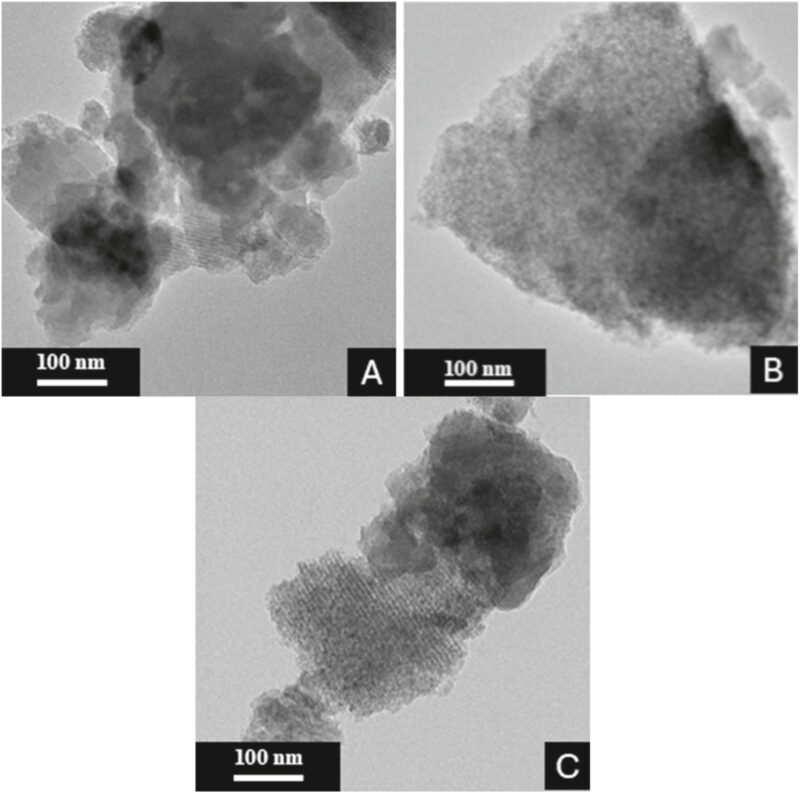
Mesoporous bioactive glass nanoparticles (MBGNPs) are widely studied for their potential in bone regeneration due to their high surface area and bioactivity. A common method for synthesizing these materials is Evaporation-Induced Self-Assembly (EISA), which enables the formation of uniform pore structures. However, achieving precise phosphorus content has remained a challenge, as conventional precursors often result in lower-than-expected incorporation.
In this study, the team developed an optimized EISA approach to improve phosphorus incorporation. By replacing the commonly used triethyl phosphate (TEP) with diethyl phosphate (DEP) and adjusting synthesis conditions, they significantly enhanced the efficiency of phosphorus incorporation into the glass structure. Importantly, this approach also enabled the successful addition of therapeutic dopants such as copper–magnesium (Cu–Mg) and copper–strontium (Cu–Sr) without compromising the mesoporous architecture.
These findings demonstrate that careful selection of phosphate precursors and fine-tuning of synthesis parameters are essential for achieving precise compositional control in doped MBGs. This advancement opens new possibilities for designing bioactive materials with tailored properties for biomedical applications, particularly in bone tissue engineering.
The publication was funded by the Slovak Recovery Plan under grant agreement No. 09I01-03-V04-00040 (Project acronym: BioChemBalance).
Read the full article here: https://doi.org/10.1016/j.ceramint.2026.03.361